Cruising can be a fantastic way to see the world if you have limited mobility.
Instead of constantly worrying about changing hotels, travelling between destinations or navigating unfamiliar transport, a cruise ship essentially becomes your base while the destinations come to you.
But if you use a mobility scooter or electric wheelchair, there are a few important things you need to know before booking a P&O Cruises holiday.
While mobility scooters and wheelchairs are a familiar sight on P&O ships, you can’t simply turn up at Southampton with your scooter and expect to board.
P&O Cruises has specific rules around mobility equipment, including requirements relating to cabin type, equipment size, storage, charging and declaring your equipment before you travel.
So, if you’re considering taking a mobility scooter or electric wheelchair on your next P&O cruise, here’s what you need to know.
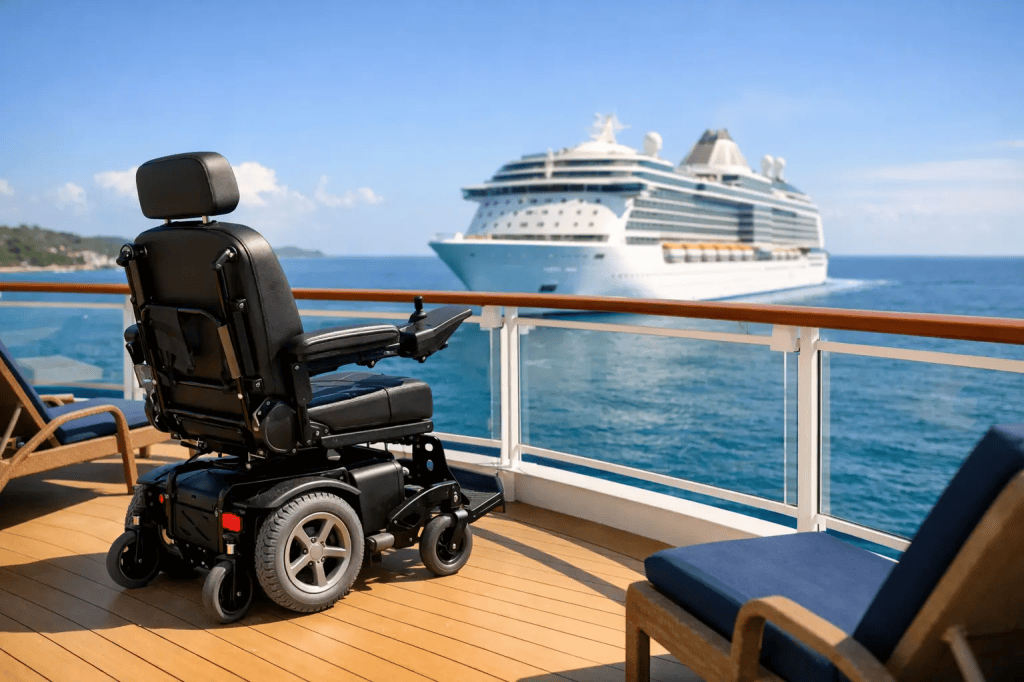
Can you take a mobility scooter or electric wheelchair on a P&O cruise?
Yes.
P&O Cruises welcomes guests who use wheelchairs and mobility scooters, and its ships have accessible facilities and routes throughout the fleet. Most public areas have level or ramped access, although there are some raised thresholds and narrower areas to be aware of.
However, there are rules you need to follow.
P&O requires guests bringing a powered mobility device to tell them at the time of booking, or as soon as they know they will need one.
You will also need to provide the dimensions of your equipment when it is folded or in its smallest state.
This isn’t just an administrative detail. The size of your mobility device can determine which cabin you’re able to book.

Do you need an accessible cabin?
This is one of the most important things to understand if you’re cruising with P&O.
If you’re bringing a powered mobility device, such as a mobility scooter or electric wheelchair, P&O says you must be booked into an approved fully accessible cabin or a selected Suite or Mini-suite.
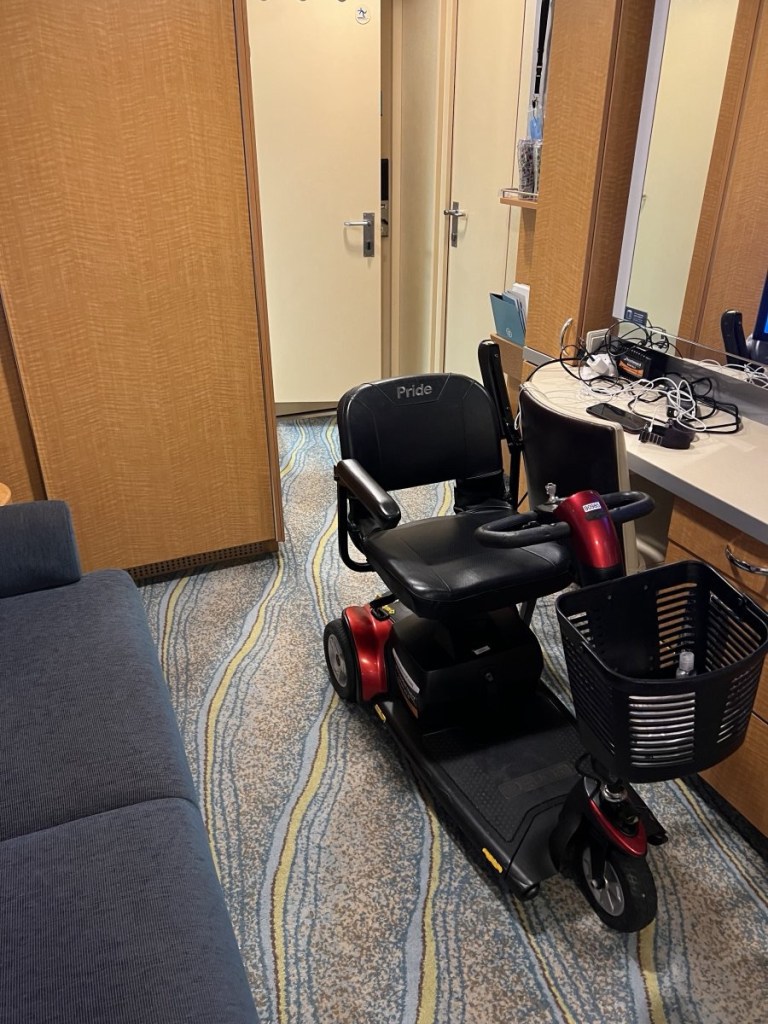
This is because the mobility device needs to be safely stored inside your cabin when it isn’t being used.
You can’t simply leave it outside your cabin in the corridor.
P&O specifically states that mobility devices must be stored inside the cabin when not in use.
This is also why you shouldn’t book a standard cabin and assume your scooter will fit.
The available space varies between cabins and ships, so it’s important to discuss your requirements with P&O or your travel agent before booking.
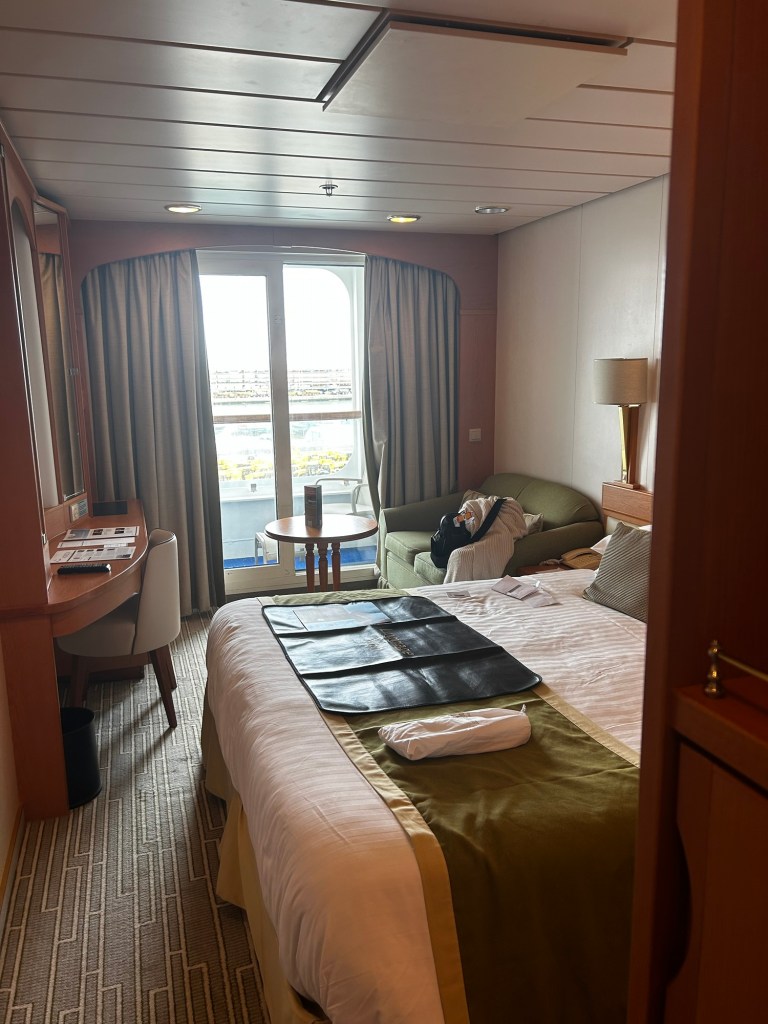
What size can your mobility scooter be?
P&O’s current guidance states that the maximum length of a mobility scooter is 120cm. This applies to mobility scooters, including lightweight and collapsible models.
However, don’t just look at the length.
You also need to consider the width, height and how the scooter can be stored inside the cabin.
P&O asks passengers to provide the dimensions of their equipment in its folded or smallest state before travelling.
If you’re buying or hiring a scooter specifically for a cruise, check these measurements against the requirements for your particular P&O ship and cabin before committing to it.
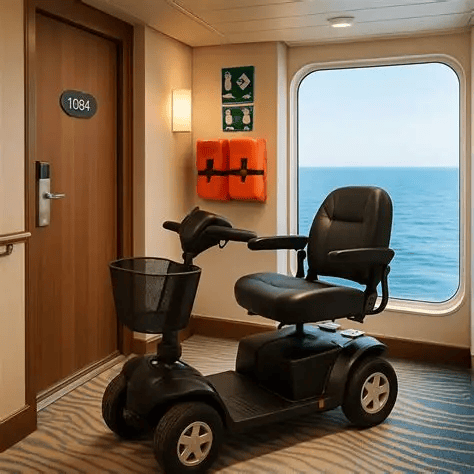
What about foldable mobility scooters?
A foldable scooter can be particularly useful for travel because it can be easier to transport and store.
However, foldable doesn’t automatically mean that you can take it into any P&O cabin.
P&O’s powered mobility device policy applies to electric and battery-powered mobility scooters and wheelchairs, including lightweight collapsible scooters.
So even if your scooter folds down into a much smaller package, you still need to declare it and make sure your cabin is approved for the equipment.
Don’t assume that because a scooter fits in the boot of your car, it will fit safely inside a cruise cabin!
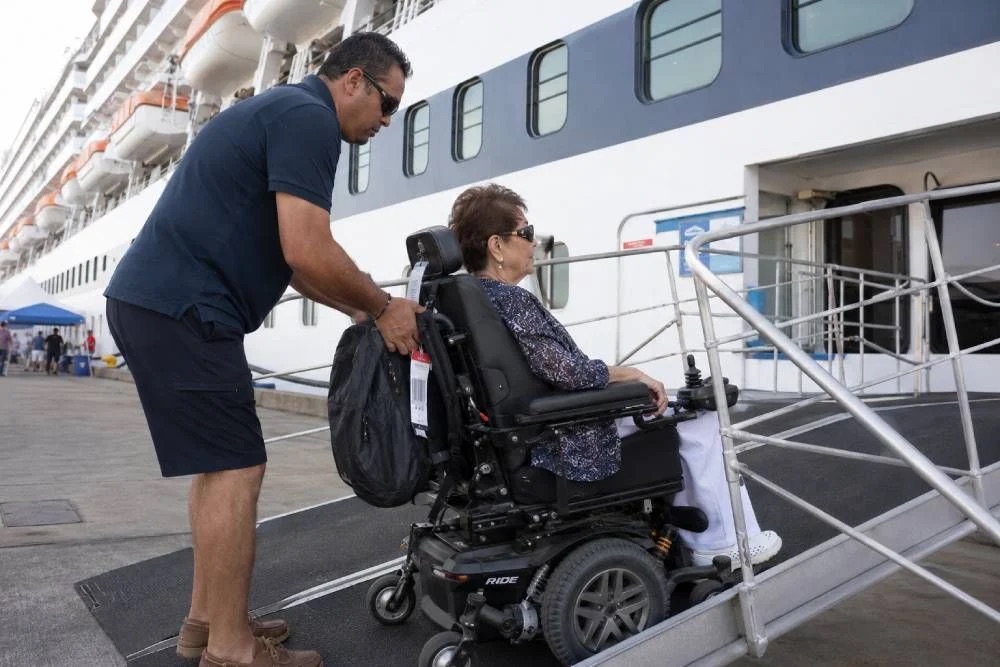
Where do you store a mobility scooter on a P&O cruise?
This is particularly important.
You cannot leave your mobility scooter or wheelchair in the corridor outside your cabin.
P&O requires mobility equipment to be stored inside the cabin when it isn’t being used.
There are good reasons for this.
Cruise ship corridors are evacuation routes and leaving equipment outside cabins could create an obstruction or safety issue for other passengers.
This is why P&O needs to know about your mobility equipment before you travel.
Your cabin needs to have enough space for the device to be stored safely.
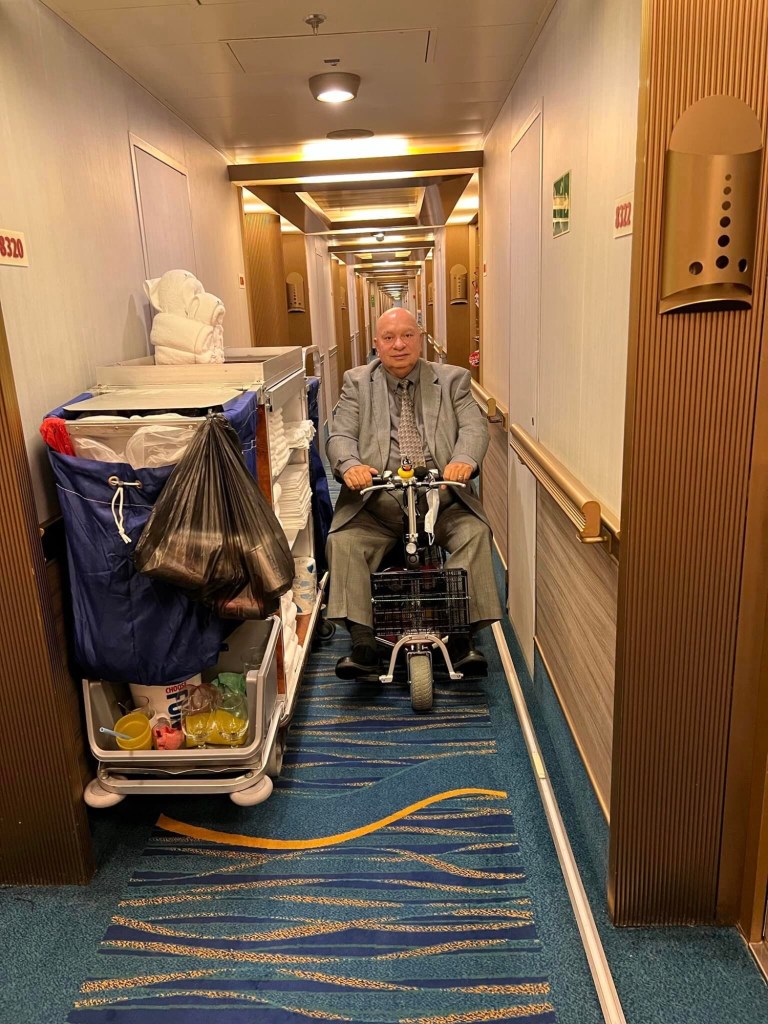
Can you charge a mobility scooter in your P&O cabin?
Yes.
P&O says that mobility scooters and electric wheelchairs can be charged in your cabin when they’re not being used.
However, the equipment must not be left unattended while charging, and P&O advises passengers to check with the manufacturer or supplier that the device is suitable for the ship’s electrical supply, including 60Hz compatibility.
It’s therefore worth checking the charging requirements of your particular scooter before you travel.
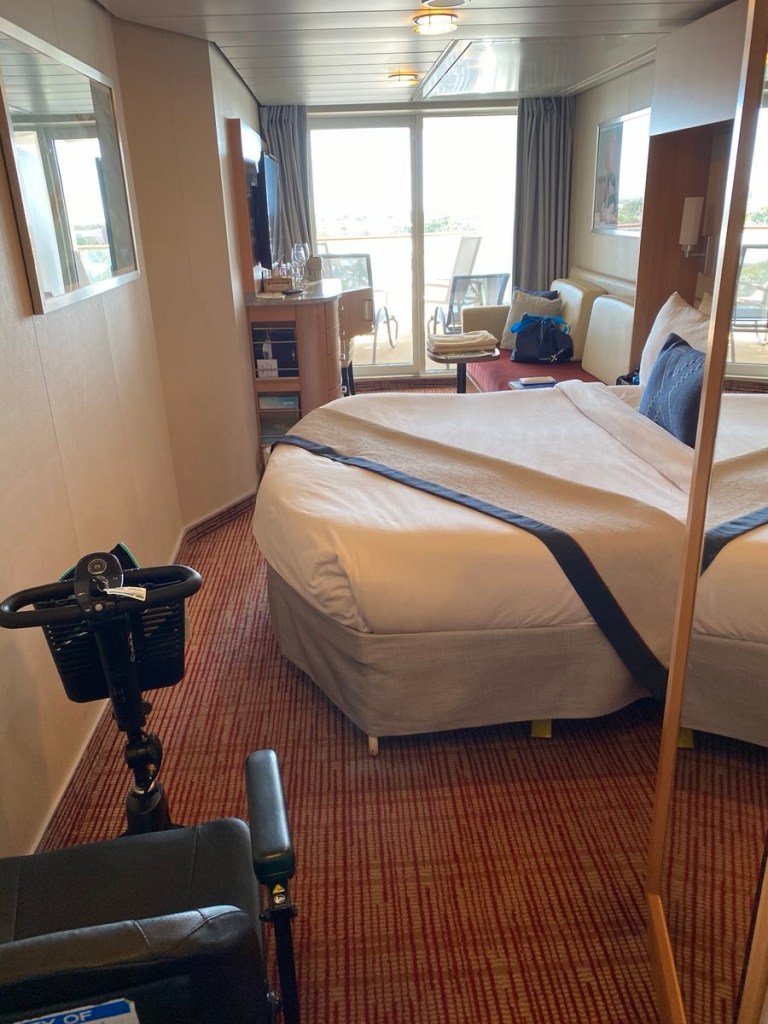
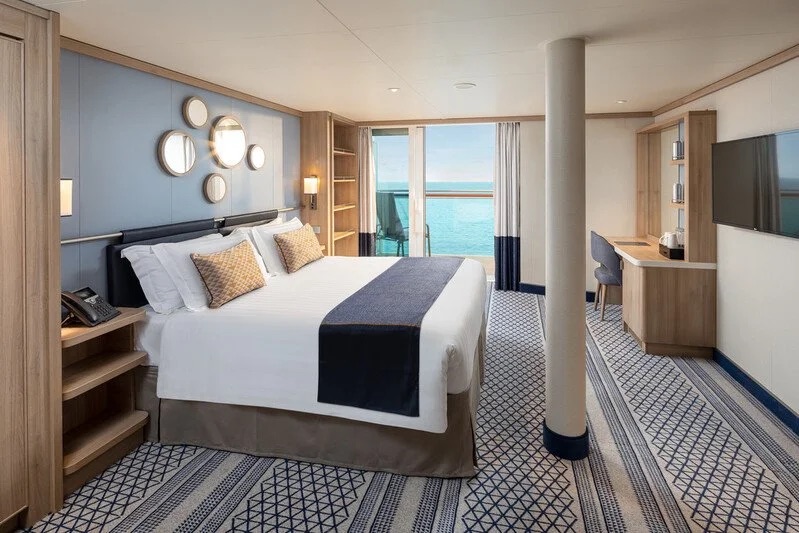
What are P&O’s accessible cabins like?
P&O’s accessible cabins are designed to provide additional space and accessibility features for guests with mobility needs.
Features can include wider doorways, additional floor space and wet-room-style bathrooms with roll-in showers, grab rails and shower seats. P&O states that accessible cabin doorways are a minimum of 80cm wide.
The exact layout and facilities vary depending on the ship and cabin.
Accessible cabins are also limited in number, so if you need one, it’s worth arranging it as early as possible.
P&O says accessible cabins can’t be booked online and recommends contacting its Customer Contact Centre or using a travel agent to discuss your requirements.
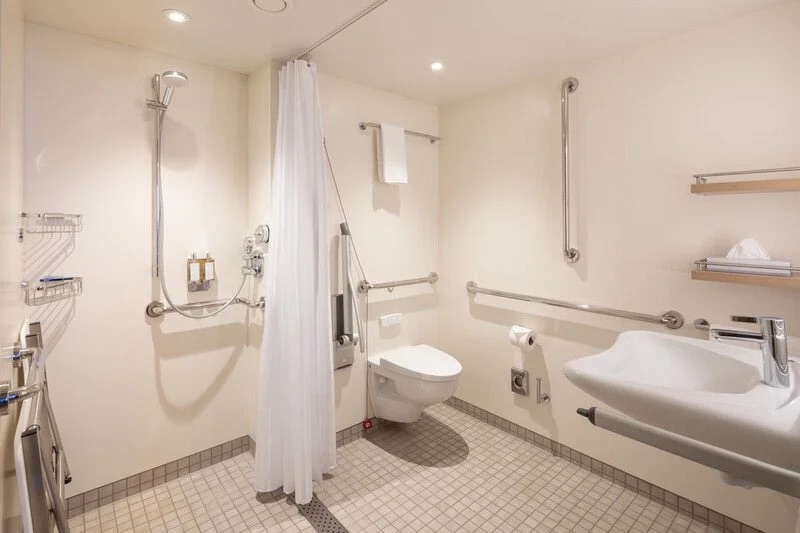
What is it like getting around a P&O ship with a mobility scooter?
P&O’s ships are large, and that’s something worth considering before you travel.
Although most areas are accessible, the distances between venues can be considerable. P&O itself warns that the size of its ships and the distances involved can be challenging for guests with impaired mobility.
On a ship such as Iona or Arvia, for example, you could potentially travel quite a distance between your cabin, the restaurants, theatre, entertainment venues and outdoor areas.
A mobility scooter or wheelchair can therefore make a huge difference if walking long distances is difficult.
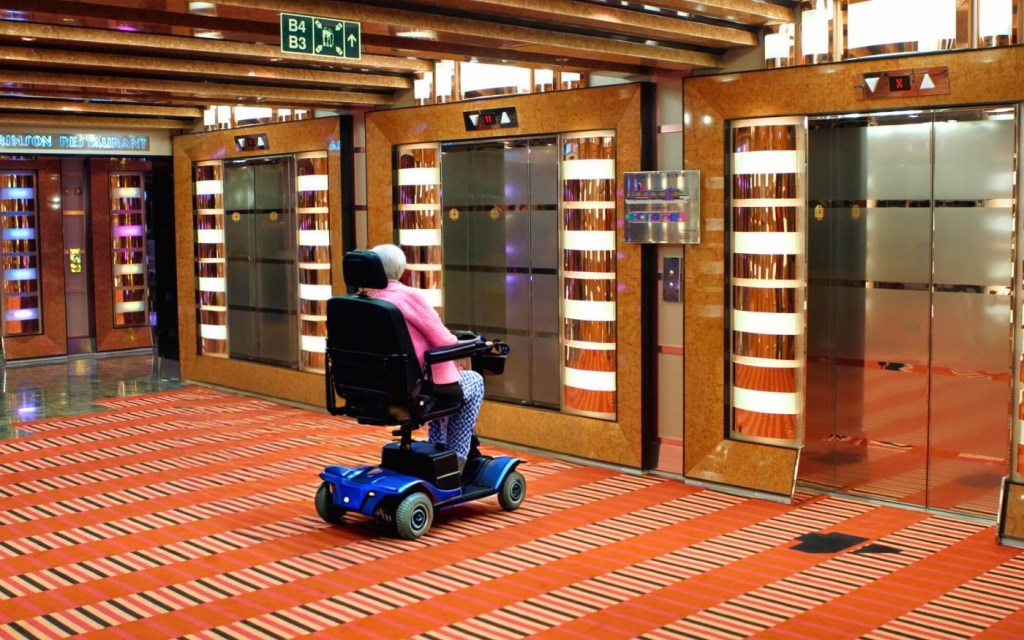
There are lifts connecting the various decks, but busy periods can make them more challenging to use.
After a theatre show, around dinner time or when passengers are returning from a port, lifts can become extremely busy.
If you use a mobility scooter, it’s also important to remember that P&O asks guests to drive mobility scooters and wheelchairs at a safe speed around the ship.
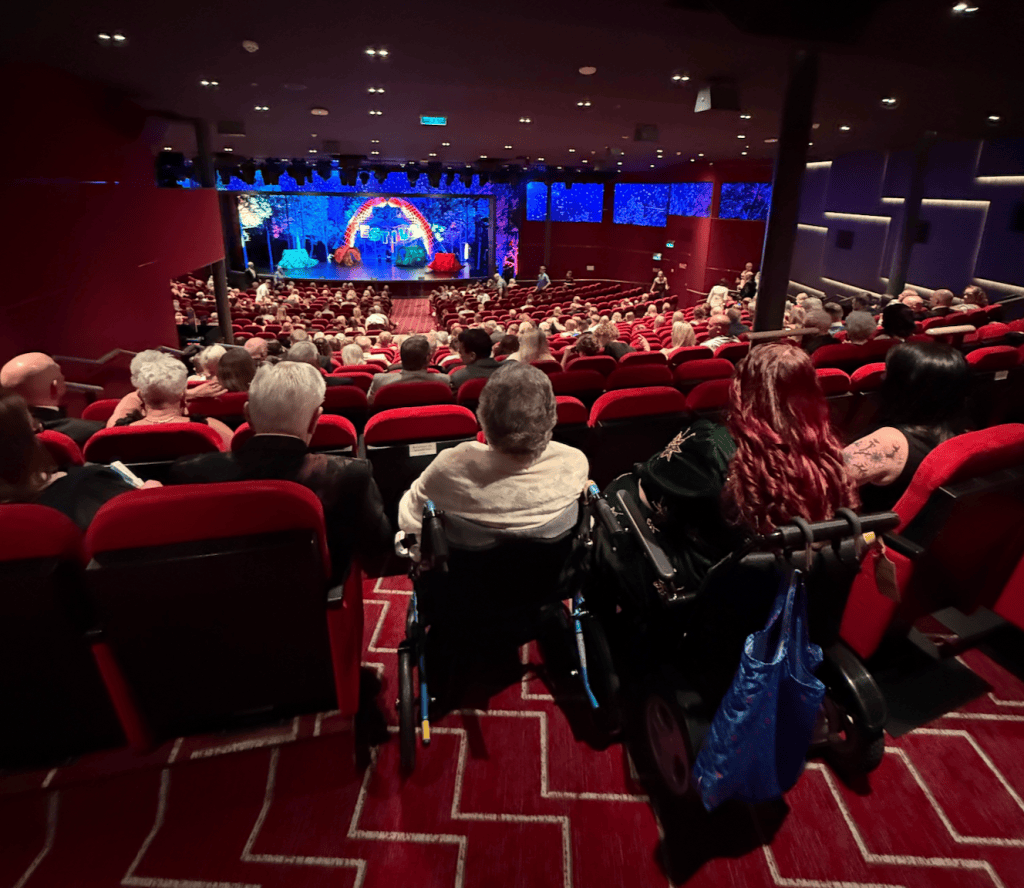
Can you take your scooter ashore?
This depends on the port, the ship’s arrangements and the accessibility of the destination.
A port where the ship docks alongside can be relatively straightforward. You may be able to leave the ship using the accessible route and continue exploring independently.
However, tender ports are different.
If your P&O cruise is visiting a destination where passengers have to use tender boats to reach shore, accessibility can be restricted.
The transfer from the ship to a tender can involve steps or a transfer between vessels, meaning that some passengers using mobility equipment may not be able to go ashore.
This is something I would always recommend checking before booking your cruise if getting off at every port is important to you.
What about shore excursions?
Don’t assume that because the ship is accessible, every shore excursion will be.
Accessibility can vary dramatically between destinations.
Some ports are easy to explore with a wheelchair or mobility scooter, while others can involve steep streets, cobbles, steps or long distances.
Even getting from the cruise terminal to the actual town can sometimes be more complicated than expected.
Before booking a P&O shore experience, check whether the excursion is suitable for your particular mobility requirements.
It’s worth asking:
- Can the excursion vehicle accommodate your wheelchair or scooter?
- Are there restrictions on the size or weight of mobility equipment?
- Will you need to transfer out of your wheelchair or scooter?
- Are there steps involved?
- How much walking is involved?
- Is the destination itself accessible?
A cruise ship might be fully equipped for passengers with reduced mobility, but that doesn’t necessarily mean every destination will be.

Can you hire a mobility scooter for a P&O cruise?
Yes, although P&O doesn’t hire mobility aids directly onboard.
P&O recommends Mobility at Sea for passengers who need to hire mobility equipment.
P&O currently states that Mobility at Sea can provide equipment for Southampton-to-Southampton sailings, subject to availability, and equipment needs to be arranged and paid for in advance.
If you’re considering hiring equipment from another company, P&O says you can do so as long as the equipment meets its size and safety requirements.
That means you should still declare the equipment to P&O before travelling.
What about walkers and rollators?
Manual mobility aids are different from powered mobility devices.
If you use a walking frame, rollator or manual wheelchair, you should still tell P&O about your requirements before travelling.
The important thing is making sure there is somewhere safe to store the equipment.
P&O states that mobility equipment should not be left unattended in public areas or outside cabins.
If you need to use a manual wheelchair inside your cabin, P&O says you must occupy a fully accessible cabin or suitable Suite or Mini-suite so that it can be safely stored.
Do you need to tell P&O before your cruise?
Absolutely.
This is probably the most important piece of advice in this entire article.
If you’re taking a manual wheelchair, electric wheelchair, mobility scooter or another mobility aid, you need to tell P&O.
P&O asks passengers to complete its On-Board Needs Questionnaire through My P&O Cruises as soon as possible after booking and no later than two weeks before departure.
However, don’t wait until two weeks before sailing if you already know you need a mobility device.
Tell P&O at the time of booking.
This allows them to make sure your cabin is suitable and that they have the information they need to accommodate you safely.
If you’re booking through a travel agent, they can also discuss your requirements with P&O.
What happens if you don’t declare your mobility device?
This is where P&O is particularly clear.
If you arrive for your cruise with a mobility device that hasn’t been declared in advance, you may not be allowed to take it onboard.
P&O says it has no storage facilities available for devices that have been denied boarding.
In other words, don’t turn up at the port hoping everything will be sorted out on the day.
You could potentially find yourself unable to board with your scooter, or even unable to continue with your cruise.
P&O’s booking conditions also state that guests who require special assistance or have reduced mobility should advise P&O at the time of booking, and P&O reserves the right to refuse passage where the required assistance or reduced mobility has not been declared.
It’s simply not worth taking the risk.
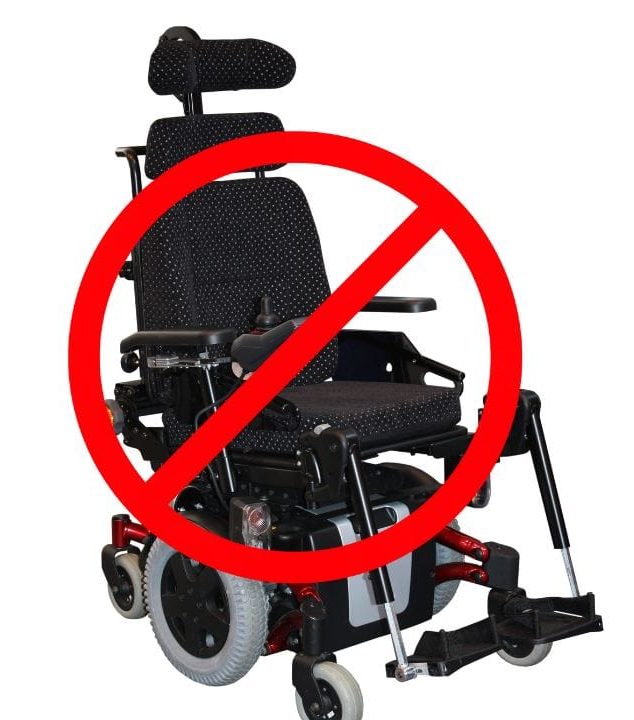
Are mobility scooters common on P&O Cruises?
Yes.
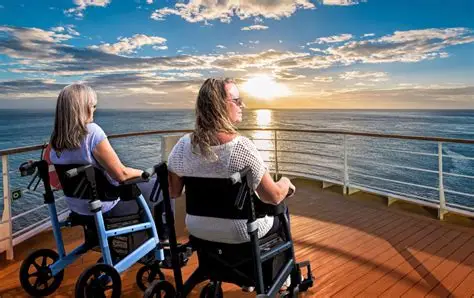
You’ll regularly see passengers using mobility scooters, wheelchairs, rollators and other mobility aids onboard P&O ships.
On larger ships such as Iona and Arvia, the distances between different areas of the ship can be significant, so having a mobility scooter can make getting around much easier for passengers who struggle to walk long distances.
The important thing is to make sure your equipment and cabin are suitable before you sail.
You don’t necessarily need to buy a brand-new scooter specifically for a cruise either.
If your existing equipment meets P&O’s requirements, you may be able to take it with you. Alternatively, hiring suitable equipment could be an option.
My biggest tips for taking a mobility scooter on a P&O cruise
If you’re considering booking a P&O cruise and use a mobility scooter or electric wheelchair, I’d recommend checking these things before you pay for your cruise:
- Will my mobility device meet P&O’s size requirements?
- Do I need a fully accessible cabin?
- Will my scooter fit safely inside the cabin?
- Have I declared the equipment to P&O?
- Can I safely charge it in the cabin?
- Are there any tender ports on my itinerary?
- Will I be able to get ashore at every destination?
- Are the shore excursions suitable for my mobility needs?
- Will I need assistance during embarkation or disembarkation?
- Would hiring a suitable mobility device be easier?
Final thoughts
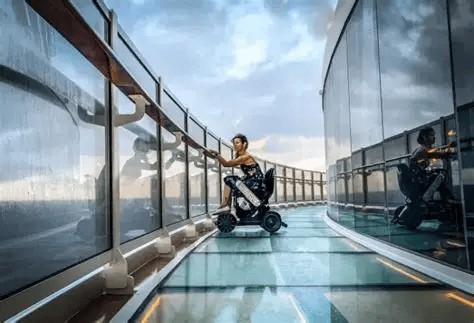
Taking a mobility scooter or electric wheelchair on a P&O cruise is absolutely possible, and for many passengers it can make a cruise holiday considerably easier and more enjoyable.
The key is planning ahead.
Don’t choose your scooter first and worry about the cabin afterwards. Start by speaking to P&O or your travel agent about your mobility requirements, the ship you’re considering and the cabin options available.
P&O has specific rules around powered mobility devices, and these are there for both passenger and crew safety.
Most importantly, declare your mobility equipment before you travel.
A little preparation before your holiday could make the difference between spending your cruise exploring the ship and destinations comfortably, and discovering at the port that your equipment can’t be accommodated.
For the latest requirements, always check P&O Cruises’ accessibility information before travelling, as policies and ship-specific requirements can change.

Don’t forget to Subscribe to be notified first for every blog I post, all you need to fill in is your email address its that simple!
If you have any cruises booked or you have cruise previously, then order your very own personalized cruise map. Head over to The Cruise Maps: Satellite Precision Customised Cruise Maps and use the code Jayestravellingadventures for 10% off!! Id love to see your maps by tagging us or sending them via our Instagram account!


Leave a comment